The Land Where Papers
Were Not Enough
Or: ICE, Deportation, and the Disappearing of Due Process
"Gestapo tactics against our fellow citizens."
— Bruce Springsteen, on ICE operations in Minneapolis, January 2026

Or: ICE, Deportation, and the Disappearing of Due Process
"Gestapo tactics against our fellow citizens."
— Bruce Springsteen, on ICE operations in Minneapolis, January 2026

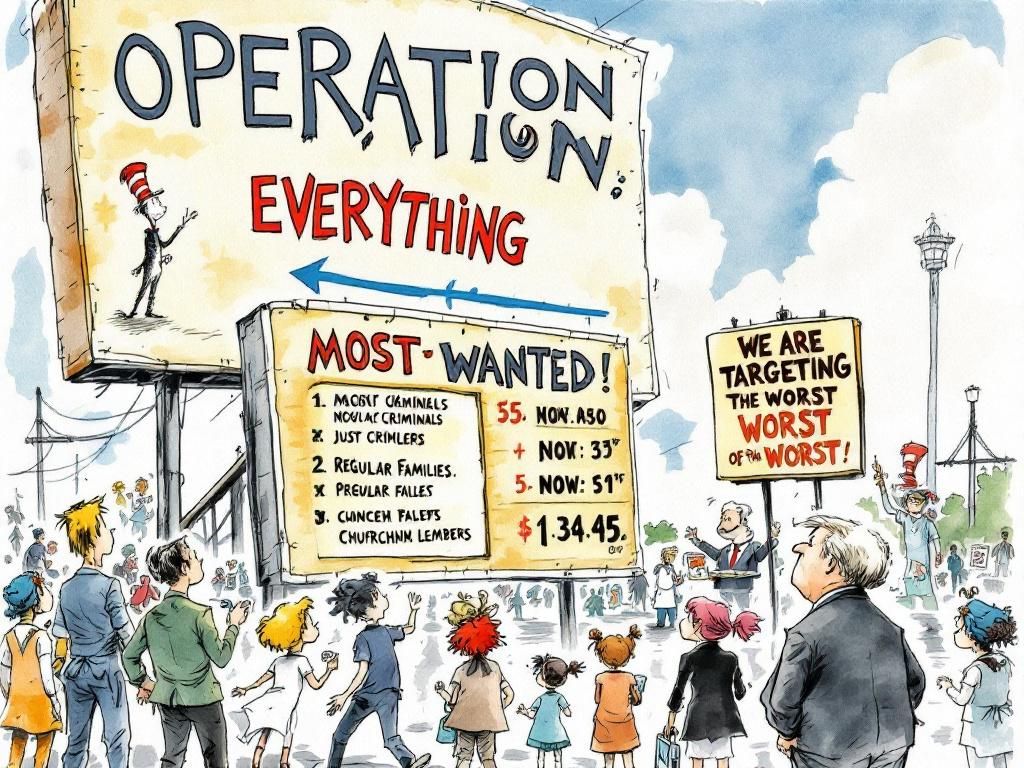
Tom Ho-Man, Border Czar, with his list of the worst of the worst
Tom Ho-Man the Border Czar stood at his podium tall
And declared to the nation — declared to them all —
That ICE would conduct the great sweep of the age:
The worst of the worst! The most violent! The rage!
He had a list and a mandate and a big sign-on bonus —
Fifty thousand dollars! The recruitment was on us!
No degree required. Relaxed vetting standards too.
Sign up! Get your badge! There is much work to do!
And what was the mission? Tom Ho-Man was clear:
"We are going after criminals — the worst, you should hear."
Then the data came in. The numbers told their tale.
Seventy percent of those detained — without fail —
Had never been convicted of a crime. Not one.
The worst of the worst? Mostly families. Under the gun.

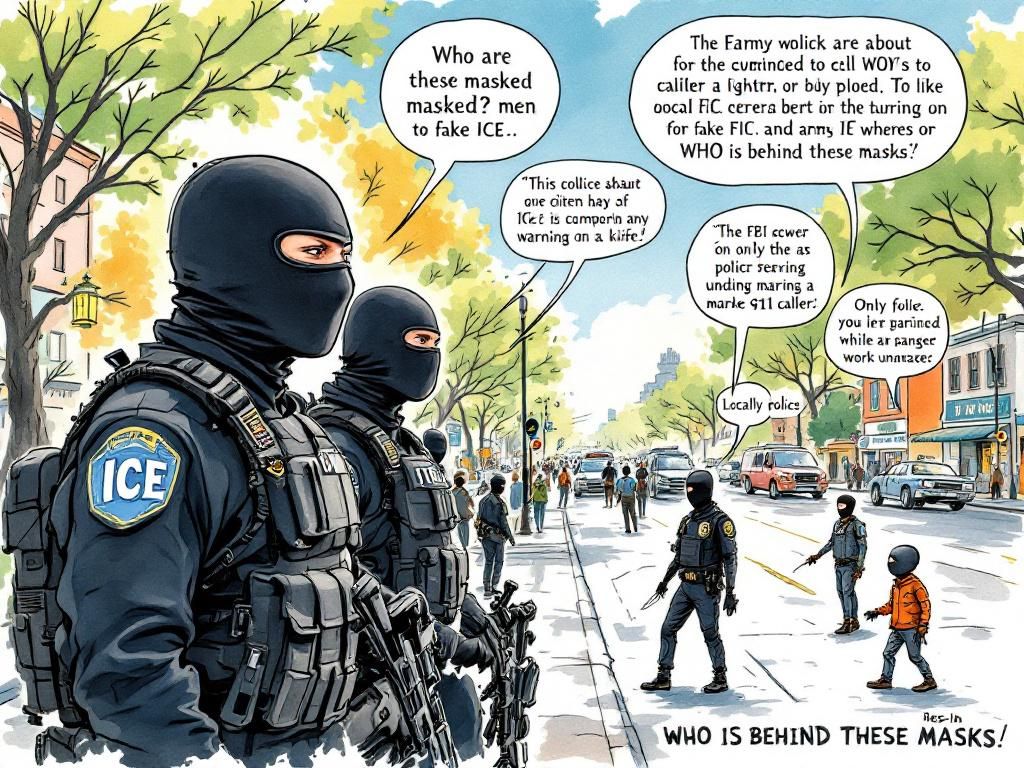
Rep. Rask-In, asking the question nobody could answer
Now every branch of the armed services wears
Its name on its uniform — Army, Navy, who cares —
Marines, Air Force, Coast Guard, local police —
All unmasked. All identified. None with a crease
Of hidden identity across their face in the street.
Except for ICE. The masks make it complete.
Rep. Rask-In of Maryland wrote with a heavy heart
To Bon-Bondi and Secretary No-Em: "We must start
By asking: how many pardoned January Sixth insurrectionists
Have been given guns and badges in this administration's mists?"
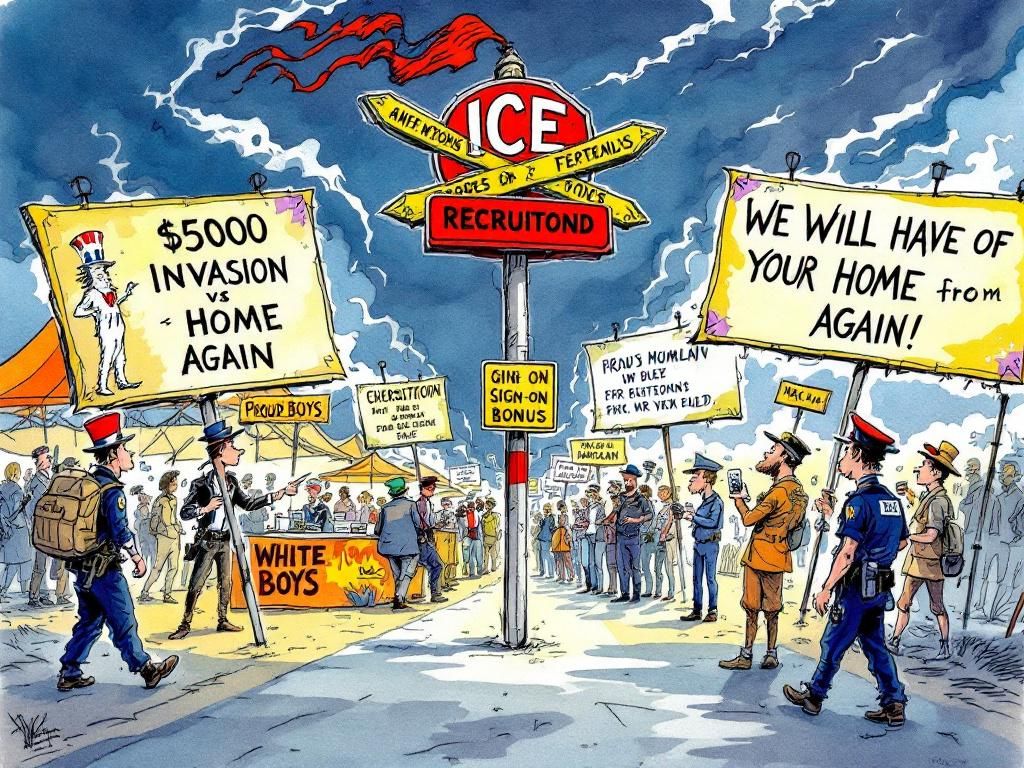
For DHS had courted them openly — with white nationalist song:
"We will have our home again" — the Proud Boys' anthem strong —
Played in ICE recruitment videos and ads most bold.
At gun shows, MMA venues, rodeos — the story told:
"One Homeland. One People. One Heritage." the Labor Dept. said.
Legal scholars noted the phrase — and turned slightly red —
For it echoed the language of a very different regime
From eighty years earlier. Not the American dream.

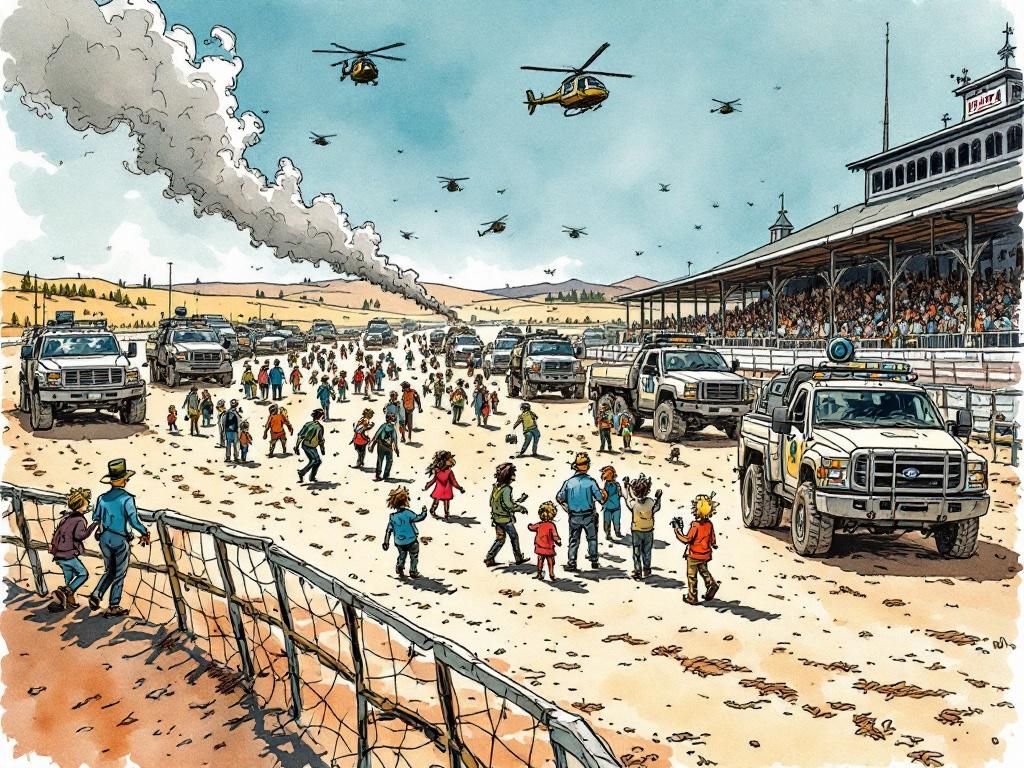
La Catedral racetrack, Wilder, Idaho — October 2025
In Wilder, Idaho, on an October fall day,
Two hundred officers arrived in armored truck array —
With helicopters circling the racetrack above
And weapons drawn. This was not done with love.
Four hundred people at the track — families and friends —
Were detained at gunpoint. That's where it ends:
Zip-tied. Hands behind backs. On the dirt and the ground.
For four hours. No food. No water. Not a sound
Of explanation from the officers masked and equipped.
American citizens among those detained and strip-
Searched of their dignity for attending a race.
The horses watched from their stalls. What a disgrace.
The ACLU filed its lawsuit with great speed.
Illinois Governor reported: children zip-tied. Indeed.
DHS called the account "absurd" and denied it all.
The videos existed. Courts began to hear the call.

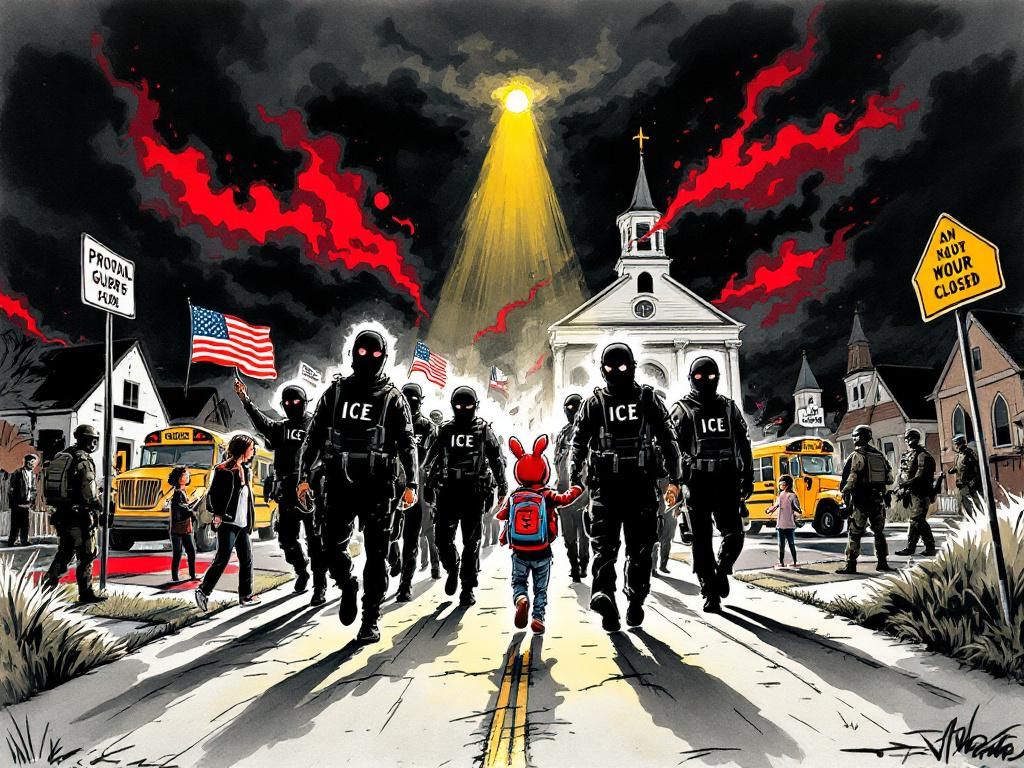
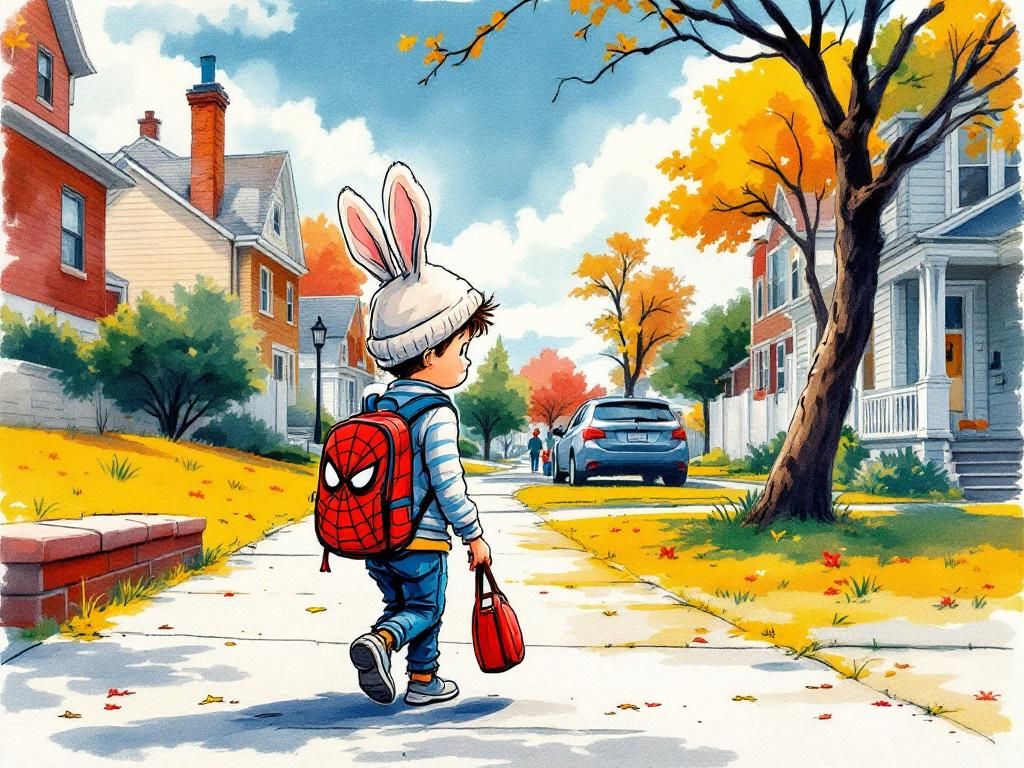
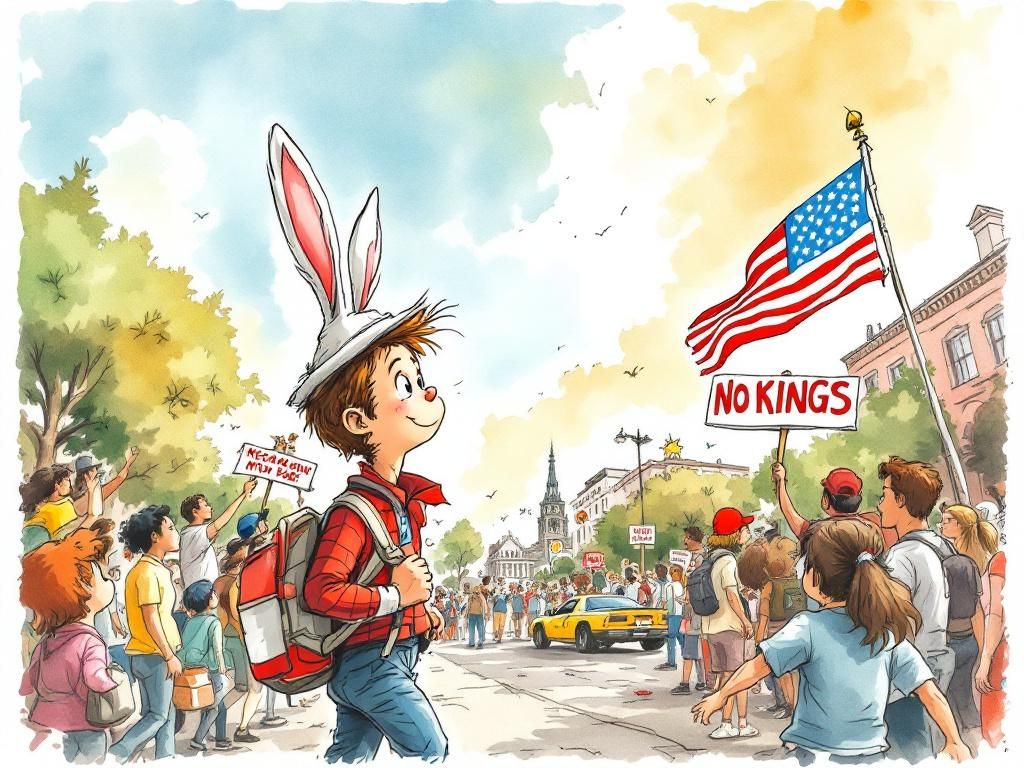
Liam Conejo Ramos, age five, walking home from preschool
Now Liam was five years old — just five —
Walking home from his preschool, alive
With the wonder of being five years old in the world,
In his bunny-eared knit hat, his Spider-Man backpack unfurled.
The agents had been watching. They knew the route well.
They detained Liam first — to use him, to compel
His father to emerge from the safety of their home.
The boy as bait. The backpack. The bunny hat. Alone.
His father came out. Of course his father came out.
What father would not? Without question. Without doubt.
Both were detained. Both transported. Texas bound.
The backpack and the bunny hat left on the ground.
Liam was later released. But the image remained:
A five-year-old in a Spider-Man backpack detained
As an instrument of federal immigration enforcement.
That is what happened. That is the statement. That's the torment.

The ICE recruitment table at a gun show, with special music
Now Trump had pardoned, on his very first day back,
All fifteen hundred January Sixth who had attacked
The Capitol — including a hundred Proud Boys members
Convicted of their crimes in the cold winter embers.
Stewart Rhodes of the Oath Keepers — eighteen years, commuted.
Enrique Tarrio of Proud Boys — twenty-two years, disputed.
Jared Wise — who urged the mob to kill officers there —
Was given a high-ranking job at the DOJ. Rare.
And at gun shows and rodeos and MMA gyms,
The ICE recruiters played their patriotic hymns:
"By God we'll have our home again
By God we'll have our home
By blood or sweat we'll get there yet
By God we'll have our home."
The Proud Boys recognized the tune. Of course they did.
The former FBI director for ICE? He said he was amid
Great worry that "Proud Boys and hoodlums" would be hired —
"What self-respecting career officer would go there?" He admired
The question he'd asked. The answer was already clear.
The masks were on. The names were off. No one knew who was here.
The most famous wrongful deportation in American legal history
Now Garcia-Killy had lived in Maryland for years —
With his American wife and his child and his fears
Of returning to El Salvador, where a gang had threatened his life.
A court order in Two-Thousand-Nineteen — his wife —
Confirmed: he must not be deported to that country.
In March of Twenty-Twenty-Five, he was put on a plane
To CECOT — El Salvador's mega-prison — in vain
Did his lawyers protest. The court order was ignored.
He was put in the prison where abuse is outpoured.
The Supreme Court ruled — unanimously, nine to none —
That the government must facilitate his return. Done.
The government said for months it couldn't bring him back.
Then suddenly it could — and charged him on a new track:
Human smuggling. The judge reviewing found signs
The prosecution may be vindictive — between the lines,
A deputy AG had seemed to confirm the case was brought
Because Garcia-Killy had won. The punishment he sought.
Then ICE tried to deport him to Uganda. Then Eswatini.
Then Ghana. Liberia. Countries he'd never seen, teeny
Chance of success — the judge said: "one empty threat after another."
Garcia-Killy raised his fist: "I stand before you free." Another.

The places that used to be protected — and are no longer
For generations, there were certain rules understood —
Unwritten but sacred in every neighborhood:
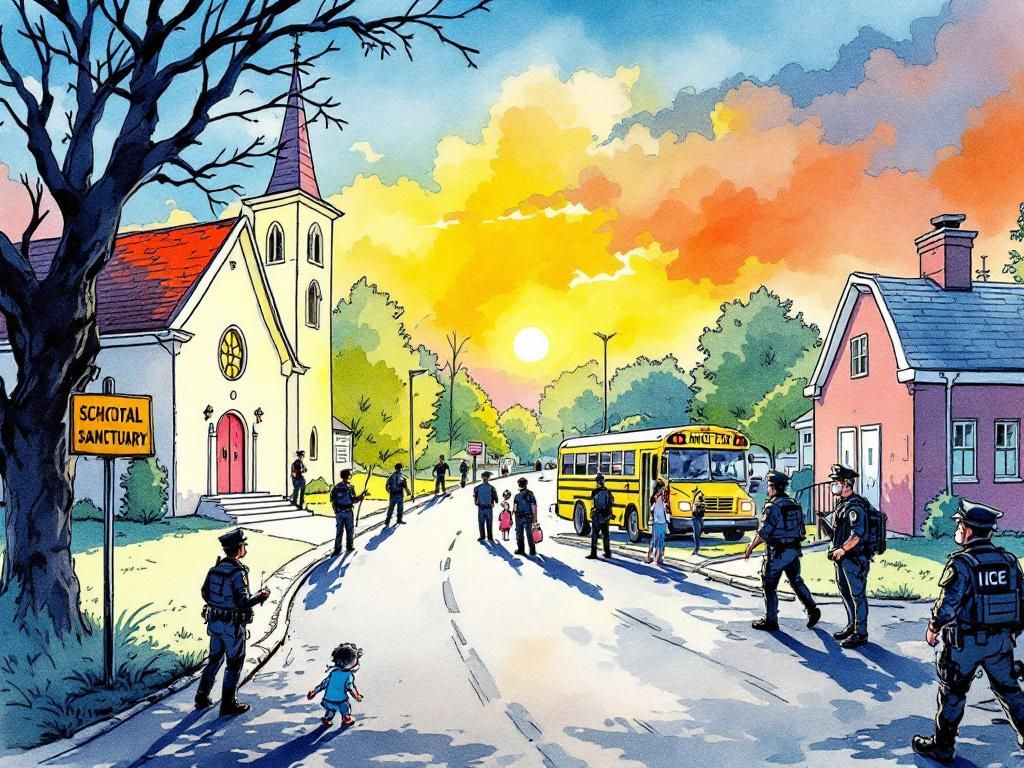
Schools were safe. Hospitals were safe. Churches too.
These were protected spaces — that was nothing new.
The Trump administration revoked those protections first thing.
Schools were no longer sanctuaries. The suffering
Came quickly: agents circled campuses at dawn.
They staked out bus stops. They waited. Then were gone
With fathers walking their children to school that morning.
Fifty students did not return after winter break — warning
Signs ignored. The school superintendent wept:
"The trauma is taking a toll on everyone kept."
The hospital — where a seven-year-old was detained
At the parking lot after an ER visit — had stained
The promise of medical safety forever and clear.
The church — where agents circled on Sunday — brought fear.

Minneapolis. January 7, 2026. Operation Metro Surge. The ninth time ICE had opened fire since September.
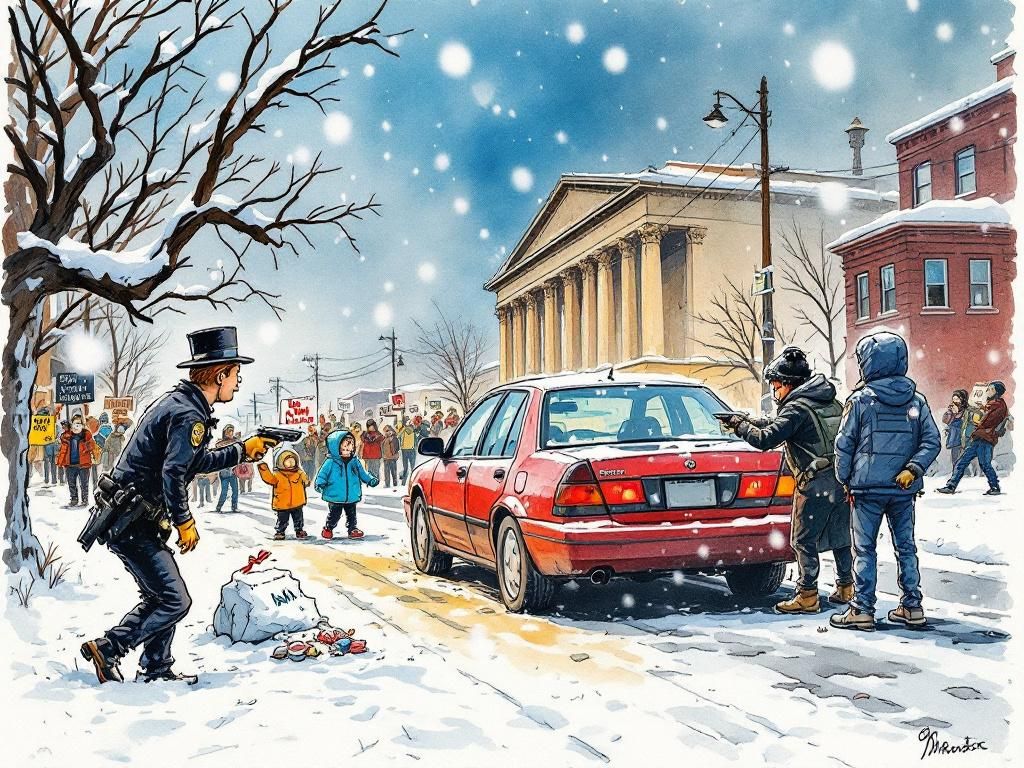
She was in her car in the snow of a Minneapolis street
When Operation Metro Surge came — two thousand agents fleet —
The largest immigration enforcement operation ever done.
Agent Ross circled her car. Then he used his gun.
Three shots. She died. A mother of three.
A US citizen. Renée Good. She was free
To be in her car on her street in her snow.
It was the ninth time ICE had opened fire — you should know —
In five states and Washington since September alone.
At least four others had died. Renée was not alone.
Spring-Stein wrote Streets of Minneapolis. U2 named her.
Over a thousand protests erupted. Her name claimed her
Place in history: the woman who died in the snow
Because masked agents came to a city — and wouldn't go.
Senator Dur-Bin, with the data, and the government, with its claims
Operation Midway Blitz had swept up four thousand five:
Three thousand seven hundred and thirty-nine — alive
But without a criminal conviction of any kind.
The worst of the worst. That's what you'll find
When eighty-two percent of your operation's arrests
Are people who have never committed offenses. The tests
Of the actual data kept coming up the same way:
This was never about crime. That was never the play.

Minneapolis. The country. Courts. Communities. Still here.
And yet — and yet — the people were not quiet.
A thousand protests would not be turned to riot
By cold or snow or National Guard on the street.
They marched where Renée Good died. In the sleet.
The courts kept blocking each attempted deportation.
Judge Xin-Is blocked Ghana, Uganda, every nation
They tried to ship Garcia-Killy to without his say.
Federal judges ruled: no lawful basis. Not today.
Communities formed ICE watches. Know-your-rights nights.
Lawyers flooded into Minnesota. Solidarity lights.
The face of Liam in his Spider-Man backpack and hat
Became the face of a movement. Imagine that.
Spring-Stein said it simply — in the New Jersey cold:
"If you believe you don't deserve to be murdered
For exercising your American right to protest —
Send a message to this president: ICE out of Minneapolis."
The message of Liam's backpack is the one that remains:
A country that zip-ties five-year-olds and then claims
It is targeting only the worst of the worst —
Is a country that has lost something. At its worst.
Unless someone cares — really, truly, a lot —
The Bumbloo-Wee world will keep going to rot.
(Renée Good's name is in the snow. Liam went home. The raids continue.)
This is a work of political satire. All events, operations, deaths, detentions, court rulings, and quotes
are drawn from public record and published journalism through May 2026.
Renée Nicole Good was a real person who was killed. Her name deserves to be remembered.
Liam Conejo Ramos was a real five-year-old. He has since been released.
Kilmar Abrego Garcia is fighting his case in court. He maintains his innocence.
170+ US citizens were detained. Most had their cases dropped.
The author maintains no personal grudge against seashells, Spider-Man backpacks, or bunny hats.
Only against what was done to those who wore them.